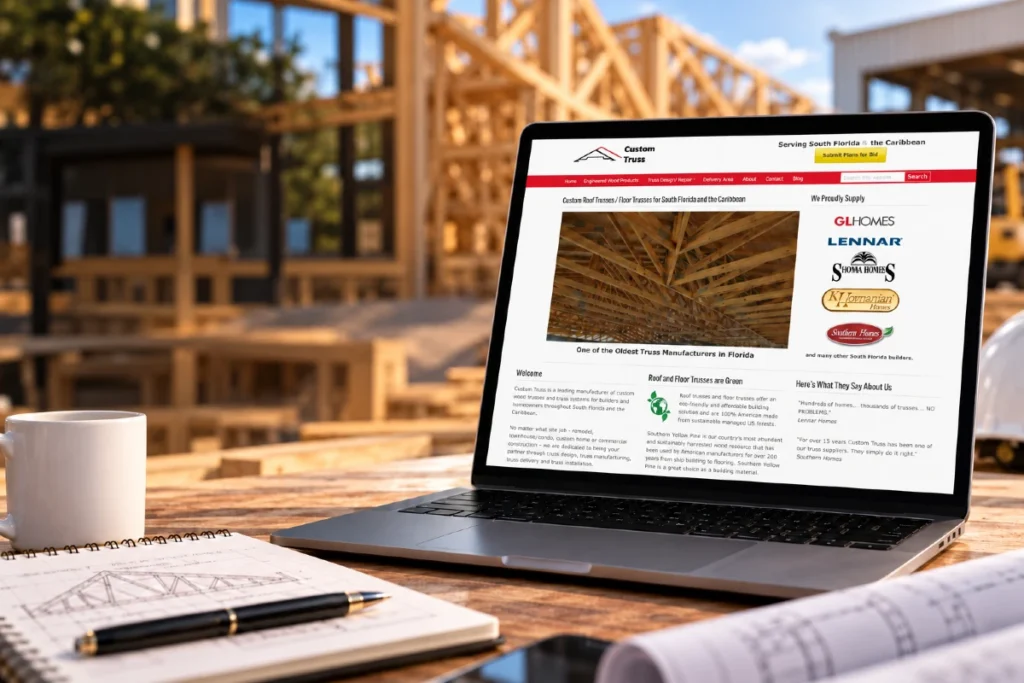
How I grew a truss manufacturing business from $3.8 million to nearly $10 million in three years
What engineering, manufacturing, estimating and website development taught me about growing a business
When I acquired a structural wood truss manufacturing company in South Florida, it was generating approximately $3.8 million in annual revenue.
During my first three full years of ownership, annual revenue grew to nearly $10 million.
Getting there required changes throughout the business. We replaced engineering technology, modernized manufacturing equipment, changed how we estimated jobs, reorganized customer relationships and rebuilt the website to reach markets we weren’t adequately serving.
The website came after the operational improvements. That sequence was deliberate.
I wanted to understand where the opportunities were, what they would cost to pursue and whether we had the capacity to deliver on them.
It’s the same approach I bring to website development today.
I started by examining our manufacturing costs
Structural roof and floor trusses are engineered products. Every job begins with construction plans that must be translated into designs meeting applicable building codes, including Florida’s demanding hurricane requirements.
Those designs determine the lumber, connector plates, cutting instructions and assembly specifications. Skilled employees turn the engineering into finished components, and specialized trucks transport the completed trusses to construction sites.
Our largest costs were materials, labor and delivery.
We couldn’t eliminate those costs. But I wanted to know whether our existing engineering and manufacturing systems were producing the most economical designs and making effective use of our people and equipment.
The engineering software was a logical place to investigate.
We tested a competing supplier instead of relying on its claims
The truss industry had two dominant connector-plate suppliers, each offering specialized engineering software tied to its manufacturing systems.
We were using one supplier. Alpine, its principal competitor, had been pursuing our business for years.
I arranged for an experienced designer to receive Alpine software training and installed the system at his workstation.
We then tested the software against three kinds of work we regularly manufactured:
- Multistory custom homes with roof and floor trusses.
- One- and two-story production homes.
- Remodeling and addition projects requiring new or replacement trusses.
We compared the time required to engineer each project, lumber quantities and waste, connector-plate requirements, material costs and the information generated for production.
Alpine performed better on nearly every criterion we tested.
There was a small increase in connector-plate costs, but the improved lumber utilization more than offset it. The engineering work also took less time.
That distinction mattered. The lowest price for an individual material wasn’t necessarily producing the lowest overall manufacturing cost.
I now had evidence that changing the engineering system could improve the business. But realizing the full benefit would require additional investments.
The supplier agreement made modernization practical
Switching systems meant upgrading the engineering department’s computers and purchasing a robotic saw that could work directly with the new design software.
Rather than fund everything independently, I negotiated with Alpine.
Under our agreement, Alpine purchased the new engineering workstations and provided favorable financing for the robotic saw. In return, we committed to purchasing its connector plates for three years.
That negotiation made the technology investment more manageable while giving Alpine the long-term purchasing relationship it wanted.
The improvements changed our staffing and production requirements substantially.
We reduced the engineering department from 14 people to eight.
Previously, the cutting operation used six saws and eight operators on one shift. With the integrated robotic saw, we operated two shifts using three operators, keeping the cut components flowing to our assembly crews.
We were getting more value from the engineering work and the cutting operation while maintaining the structural requirements of the finished products.
In the first two years following the Alpine conversion, annual revenue grew from approximately $4 million to $8 million.
The conversion was an important part of that growth, although it was not the only change we made.
More accurate bids made our margins more predictable
One of the less visible improvements was in estimating.
Before the engineering changes, two estimators prepared relatively quick cost calculations. Customers could provide sketches, incomplete drawings or descriptions of what they wanted.
Those estimates weren’t always reliable.
When we overestimated, we could lose a job we might otherwise have won profitably. When we underestimated, we could win a job at a price that didn’t adequately reflect its manufacturing cost.
I changed the estimating requirements.
Customers needed to submit actual construction plans. Instead of using two conventional estimators, we assigned one trained designer to run those plans through the engineering software and develop a much more informed bid.
If we won the job, we performed another design-optimization pass before manufacturing.
This didn’t produce extraordinary gross margins. Lumber, connector plates, labor and transportation were still real costs.
It reduced the estimating misses.
That gave us a more reliable margin across projects and greater confidence in the work we were accepting.
I protected the existing business before pursuing new customers
The company already had valuable relationships with custom-home and production builders.
Many of the largest accounts had worked with the previous owner, so I personally contacted those customers to make sure they were satisfied with the continued pricing, service and support.
Once those relationships were stable, I transitioned their day-to-day management to a more junior salesperson.
That freed my time for developing additional business without neglecting the accounts we already depended on.
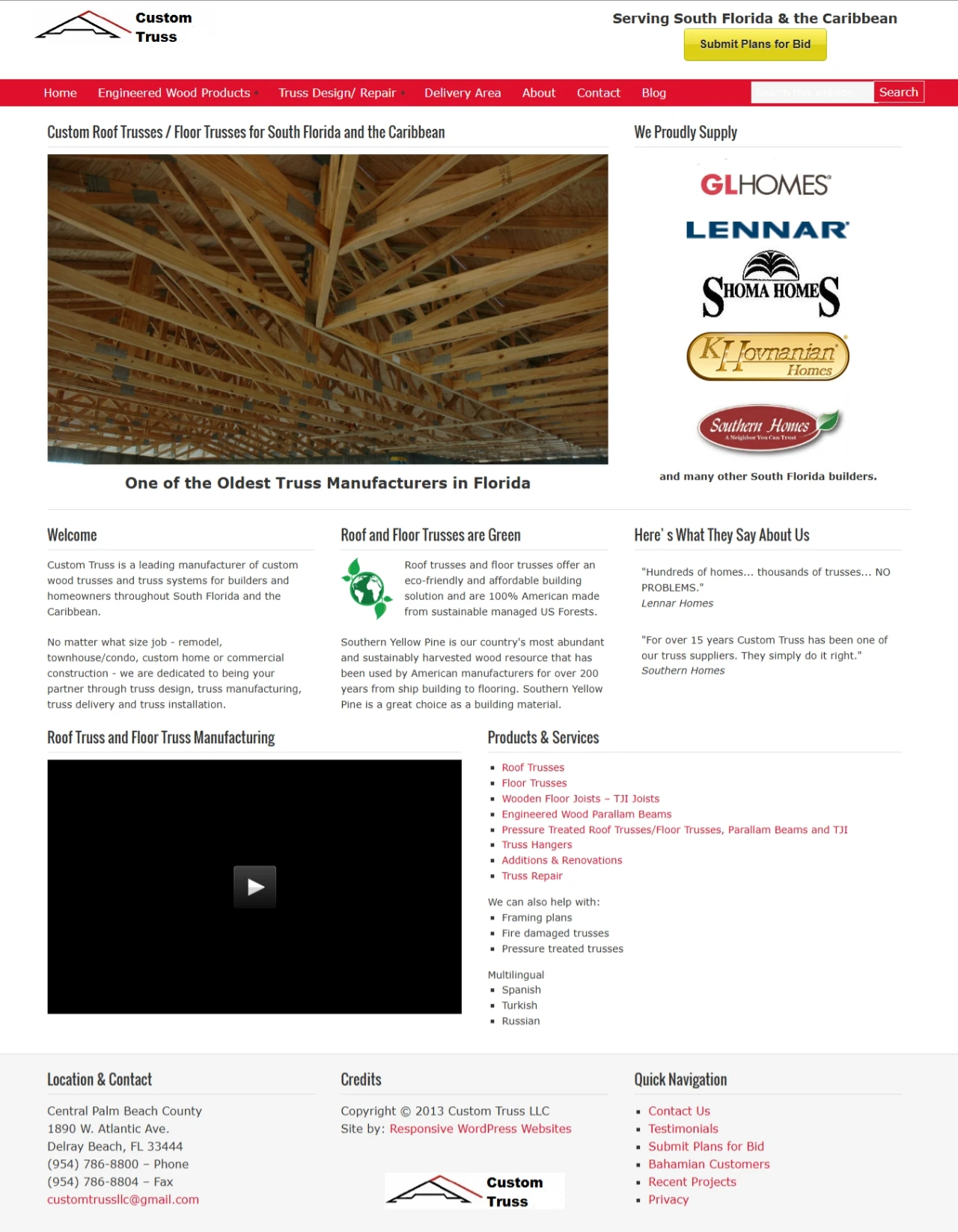
One of the places I directed that attention was our website.
The website wasn’t explaining what we could sell or where we could sell it
Our original website had become a poor representation of the operation.
It was outdated and generic, with little substantive information about individual products and services. It also lacked the geographic targeting needed to reach builders searching in the markets we wanted to serve.
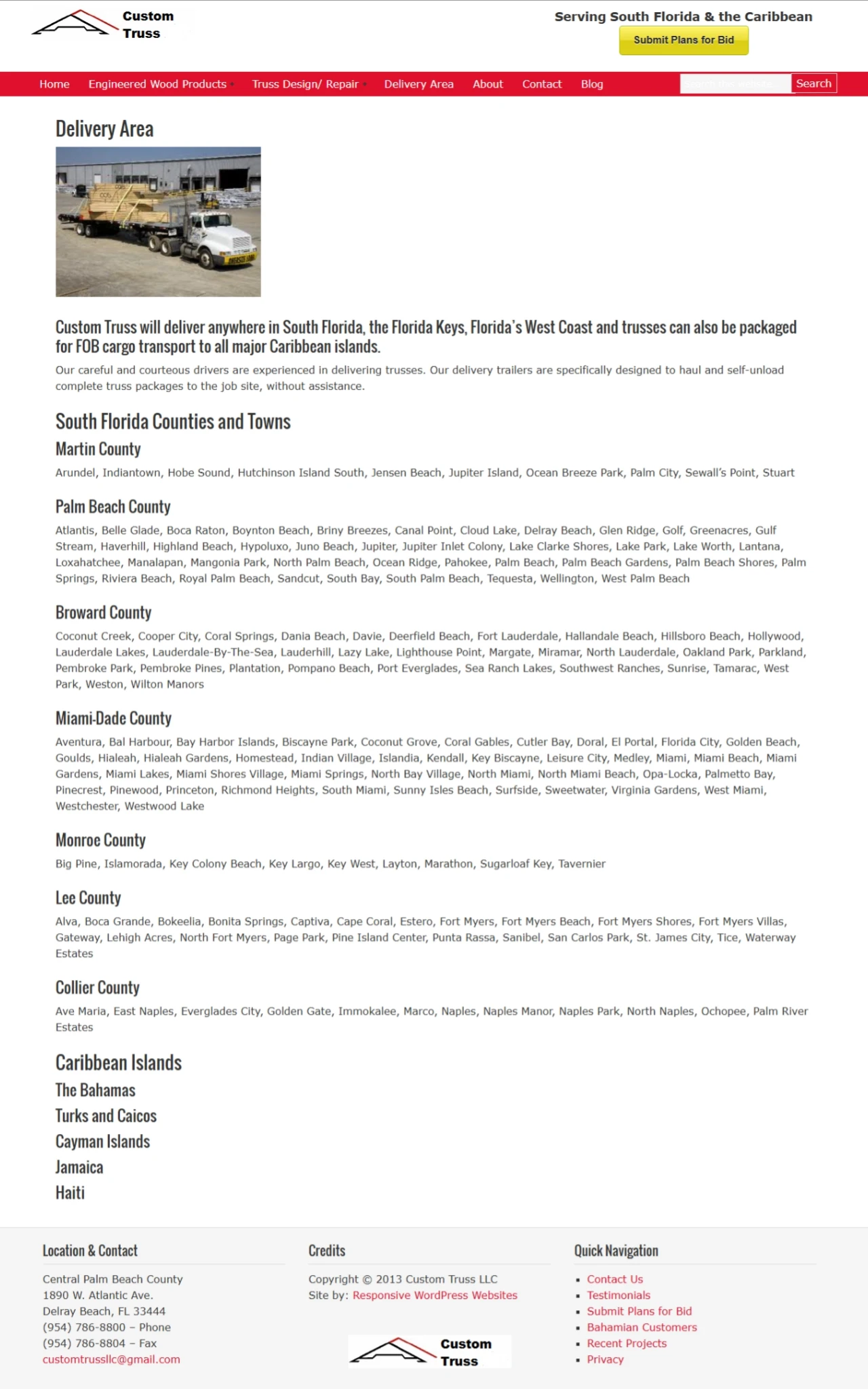
I developed more extensive product and service content and created geographically targeted pages based on our actual delivery capabilities.
That last consideration was especially important.
Roof and floor trusses are long, heavy and expensive to transport. Our trucks, drivers and fuel costs made longer-distance deliveries progressively less economical. We generally preferred jobs within roughly 90 miles.
So the geographic strategy had to follow the economics of transportation.
We targeted South Florida markets we could realistically serve rather than treating every city as an equally attractive opportunity.
We also made Submit Plans for Bid a prominent action on the website.
That connected customer acquisition to the estimating process we’d established. A useful inquiry needed to give our engineering department enough information to prepare an informed quote.
The Caribbean became a significant new market
We had always handled some export business, but it represented only about 2% of annual revenue.
I saw an opportunity to develop that market further.
Export orders had different transportation economics from domestic deliveries. Freight transporters could collect completed trusses from our facility and take them to the docks for shipment. We didn’t have to send our own delivery trucks to distant construction sites.
I developed website content specifically targeting the Bahamas, Turks and Caicos, Jamaica and the Cayman Islands.
The content went beyond listing destinations.
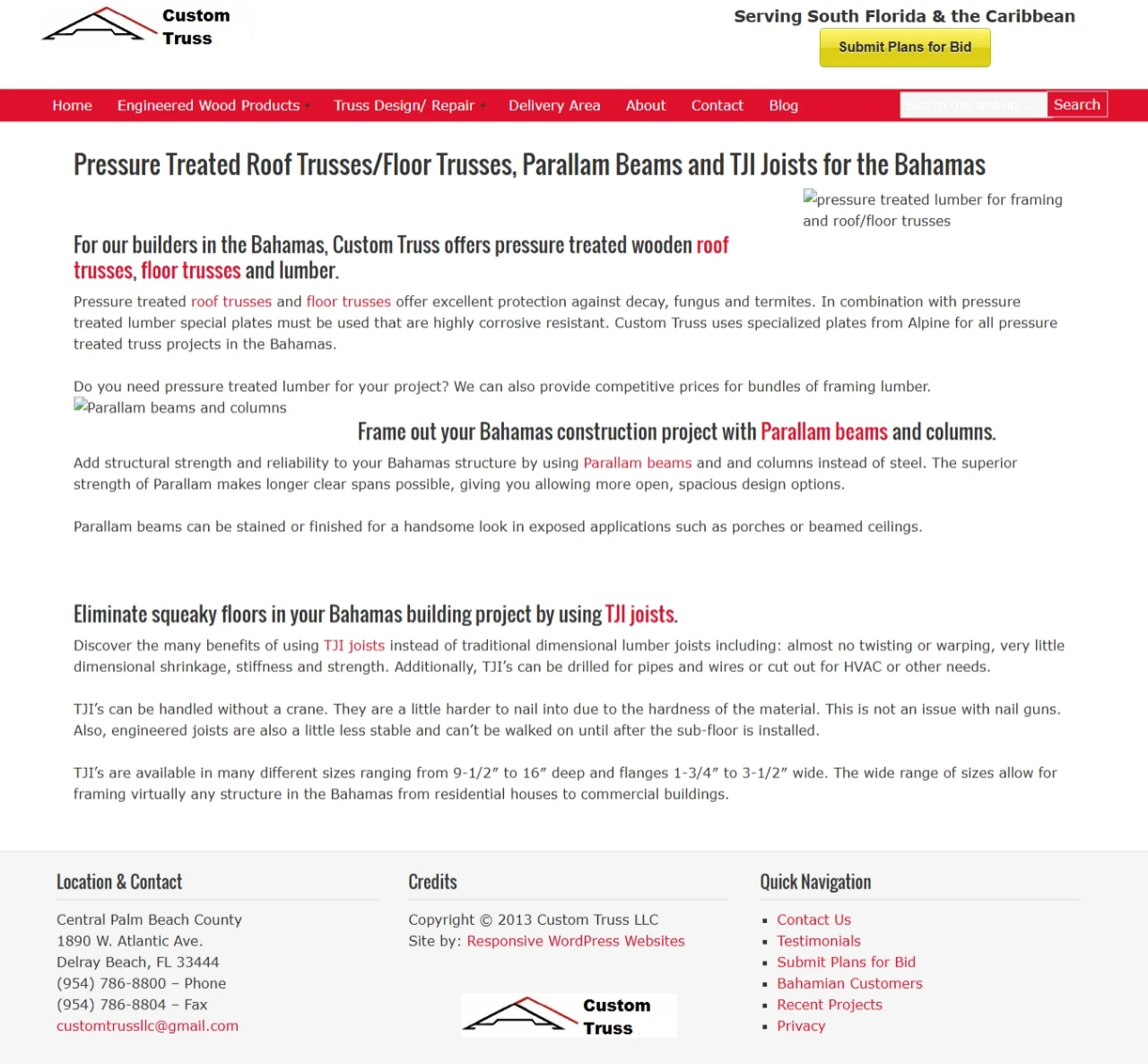
Our Bahamas page, for example, discussed the structural products and material requirements relevant to construction in that market, including pressure-treated trusses, corrosion-resistant connector plates, engineered beams and TJI joists.
It gave prospective customers information about what we could manufacture for their projects.
The new export business came through our web outreach. We didn’t run a separate direct-sales campaign to develop those markets.
Serving those customers did require an operational adjustment. We retrained our production scheduler to manage the documentation required for export orders.
Over the growth period, exports increased from approximately 2% to almost 12% of annual sales.
The result was a larger, more capable business
By the end of my first three full years of ownership, annual revenue had grown from approximately $3.8 million to nearly $10 million.
The measurable changes included:
- Engineering: Staff reduced from 14 to eight.
- Cutting: Six saws and eight operators on one shift replaced by one robotic saw operating two shifts with three operators.
- Materials: Lumber savings more than offset the slightly higher connector-plate costs.
- Estimating: Fewer pricing errors and more predictable job margins.
- Exports: Increased from approximately 2% to almost 12% of annual revenue.
I wouldn’t attribute the entire revenue increase to a website rebuild. That would ignore the engineering, equipment, estimating and management decisions that preceded it.
But the website did more than present the company in a modern format. We used it to explain our capabilities, connect with customers looking for specific products and develop markets beyond our existing sales relationships.
What this means for your website
I still see similar opportunities when reviewing websites for established manufacturers, engineering firms and other specialized businesses.
A manufacturer may have substantial equipment and expertise but offer only a short list of capabilities online. An engineering firm may perform several distinct types of work without explaining them individually. A business may serve a much larger geographic market than its website makes apparent.
I don’t assume that every one of those businesses needs a new website.
I want to understand which services are valuable, where the company can serve customers economically, what information customers need before making contact and how the business handles the work that follows.
Those questions affect the website’s structure, content and calls to action. Sometimes they also reveal opportunities or constraints elsewhere in the operation.
My experience with the truss company taught me the value of testing assumptions before making major investments and evaluating decisions against the economics of the entire business.
That’s why my work at HYPEsites starts with understanding the business rather than selecting a design or technology.
A website project makes more sense when we know what the business needs it to accomplish and what will happen when it succeeds.